Our Pick: KAGZ
Check price →The Best Bee Feeders (2026)
Feeding is how beekeepers buy time: for a package drawing comb, a nuc building up, or a light colony racing winter. We ranked the five feeders we would actually put on a hive, top feeders that pour gallons without opening the brood nest and entrance feeders that make spring stimulation cheap, and covered the syrup math and robbing rules that make any of them work.
By The BeehiveKits Hive Desk · ~13 min read · 2026-08-28

KAGZ Hive Top Bee Feeder, 1.5 Gallons
KAGZ
A listed 1.5-gallon top feeder with screened access: big fall feeds, calm refills, dry bees.
Check price★ Our Top Pick
Best Overall
KAGZ Hive Top Bee Feeder, 1.5 Gallons
A listed 1.5-gallon top feeder with screened access: big fall feeds, calm refills, dry bees.
Not sure yet? Compare all 5 picks below ↓
Our pick is the KAGZ hive top feeder (about $38): a listed 1.5-gallon reservoir that sits under the outer cover like another box, lets you refill without breaking the brood nest open, and screens the bees away from open syrup so they drink without drowning. For the fall feeding sprint, when a light colony needs gallons of thick syrup down its throat before the cold, capacity and calm refills are everything, and a good top feeder delivers both. The benefitbee top feeder (about $39) is a near-peer with a clever slurry-separation design, and the NUOMIC 2-pack (about $59) equips two hives at the best per-hive price in the guide.
Entrance feeders play a different position, and the guide covers the two worth buying. The Foxhound Bee Co entrance feeder (about $34 for a listed half-gallon 2-pack) is the quality version of the classic Boardman pattern, and the AukBeeFun 4-pack (about $14) is the budget play for spring stimulation across several hives. Entrance feeders let you see syrup levels from ten feet away and swap jars in seconds, but they sit at the front door, which raises the robbing stakes in dearth; timing them is a skill this guide teaches.
The syrup itself is the simple part, and it follows standard university extension guidance: roughly 1:1 sugar to water by weight in spring to stimulate buildup and comb drawing, and roughly 2:1 in fall so bees can store and cap it fast ahead of winter; the beekeeping resources at bee-health.extension.org and honey bee biology references such as the honey bee literature cover the whys. Plain white granulated sugar only; never feed honey of unknown origin, which can carry American foulbrood spores.
The disclosure, as always: no manufacturer paid for placement here, and none saw the guide before publication. Some links go to Amazon; if you buy through one we may earn a small commission at no extra cost to you, and it never moves a ranking. Prices are approximate at publication; check the live listing.
The short version
- Our pick is the KAGZ hive top feeder (about $38): a listed 1.5 gallons of capacity, no-smoke refills, and screened access that keeps bees out of open syrup.
- The NUOMIC top feeder 2-pack (about $59) is the multi-hive value: two 10-frame top feeders at roughly $30 per hive.
- Entrance feeders earn their keep in spring: the Foxhound 2-pack (about $34) is the quality pick, the AukBeeFun 4-pack (about $14) the budget one.
- Syrup math per extension guidance: roughly 1:1 sugar to water in spring for stimulation, roughly 2:1 in fall for fast winter stores.
- Feed when the colony needs it, not by habit: new packages, drawn-comb deficits, and light fall hives yes; during a honey flow with supers on, never.
- Robbing is the failure mode: entrance feeders in a dearth can start a frenzy, so switch to top feeders and reduce entrances when forage dries up.
| Feeder | Style | Listed capacity | Best for | Approx. price |
|---|---|---|---|---|
| KAGZ Hive Top Feeder | Top (10-frame) | 1.5 gallons | Our Pick: fall feeding | ~$38 |
| benefitbee Top Feeder | Top (10-frame) | Listed multi-quart | Syrup, water, and slurry duty | ~$39 |
| NUOMIC Top Feeder 2-Pack | Top (10-frame) | 6-channel design (listed) | Best value for two hives | ~$59 |
| Foxhound Entrance Feeder 2-Pack | Entrance | Half gallon (listed) | Best entrance feeder | ~$34 |
| AukBeeFun Entrance Feeder 4-Pack | Entrance | Standard jar mount | Best budget, multi-hive spring | ~$14 |
The 2026 bee feeder shortlist at a glance. Capacities are the manufacturers' listed figures; prices are approximate at publication, verified against our offer table in August 2026.
01 · Best Overall
Our PickKAGZ Hive Top Bee Feeder, 1.5 Gallons
A listed 1.5-gallon top feeder with screened access: big fall feeds, calm refills, dry bees.
Field check: 10-frame hive top feeder · 1.5-gallon listed capacity · screened bee access
Fall feeding is a volume problem, and volume is what a top feeder solves. A colony that comes out of harvest light may need multiple gallons of thick syrup converted into capped stores before the first hard cold, and dribbling it in one quart jar at a time is how beekeepers fall behind. The KAGZ hive top feeder holds a listed 1.5 gallons per fill, which turns the fall program into a weekly pour instead of a daily errand. It sits directly on the top box under the outer cover, bees come up through the access from the warmth of the colony, and a screen keeps them out of the open reservoir, which is the difference between feeding bees and skimming dead ones.
Setup notes from the desk: check that the feeder seats flat on your top box with no gaps a robber could work through, and level the hive front to back so the syrup pools evenly at the bee access rather than at the far corner. In cold snaps, bees will not break cluster to climb to any feeder, top or otherwise, so get the volume in during warm fall weeks rather than counting on December feeding. Mix it roughly 2:1 sugar to water for fall per extension guidance, pour, and let the colony do what it does. For two hives, price the NUOMIC top feeder 2-pack below before buying two of anything else.
- Style
- Hive top feeder, 10-frame (listed)
- Listed capacity
- 1.5 gallons
- Bee access
- Screened climb-up access
- Refill
- Under outer cover, no smoke needed
- Approx. price
- ~$38
What we like
- Gallon-scale capacity makes fall feeding practical
- Screened access: bees drink without drowning
- No-smoke, no-disturbance refills
- Keeps syrup scent off the entrance in dearth
Worth noting
- Adds height and lift to the stack
- Reservoir needs cleaning between rounds
- Useless in cold snaps when the cluster will not climb
Who should buy it: Buy the KAGZ if you run 10-frame Langstroth equipment and want one feeder that handles the serious jobs: fall stores, package establishment, and drought-dearth support. It is the right default for any beekeeper who would rather pour gallons weekly than juggle jars daily.
What we don't like: It adds a box-height layer to the stack during feeding season, which means more to lift when you do inspect. Like all open-reservoir designs it needs a good seal and occasional cleaning, because syrup left too long can ferment or mold. And in genuinely cold weather bees will not come up to it, so it cannot rescue a colony you weighed too late.
Bottom line: The KAGZ top feeder is the fall-feeding workhorse: it sits on the top box like a shallow super, holds a listed 1.5 gallons of syrup, and lets bees climb up through protected access to drink behind a screen instead of swimming. Refills mean lifting the outer cover and pouring, no smoke, no pried frames, no annoyed colony. For getting a light hive heavy before winter, this is the format and this is the pick.
02 · Best Multi-Duty Top Feeder

benefitbee 10 Frame Hive Top Feeder
A top feeder with separated channels for syrup, water, or pollen slurry: one fixture, three feeding jobs.
Field check: 10-frame hive top feeder · separated syrup/water/slurry channels (listed) · under-cover refills
Colonies do not only run short of sugar. Early spring buildup wants protein when pollen is scarce, and high summer wants water the foragers otherwise haul from the neighbor's pool. The benefitbee hive top feeder is built around that reality: its listed channel separation lets one fixture serve thick syrup, thin syrup, plain water, or a pollen slurry without mixing them into an unusable soup. The bees still access everything from below through protected openings, refills still happen under the outer cover without smoke, and the whole unit sits on a 10-frame stack the same way a shallow super would.
Trade-offs are modest. More internal geometry means more surfaces to clean, and fermented syrup or soured slurry in a channeled feeder is a scrub-brush job, not a rinse. Capacity per fill trails a plain open tank like the KAGZ, so the pure fall-volume mission slightly favors our pick. But if your feeding program spans seasons and inputs, spring stimulation, summer water, fall stores, this is the single fixture that covers all of it, at the same roughly $39 price. Pair it with the syrup ratios in the framework above, 1:1 spring and 2:1 fall per extension guidance, and one feeder covers your whole calendar.
- Style
- Hive top feeder, 10-frame (listed)
- Channels
- Separated syrup/water/slurry (listed)
- Bee access
- Protected under-cover access
- Refill
- Under outer cover, no smoke needed
- Approx. price
- ~$39
What we like
- One fixture feeds syrup, water, or pollen slurry
- Calm top-of-stack refills like our top pick
- Useful across the whole feeding calendar
- Fair price for the flexibility
Worth noting
- More cleaning than a plain reservoir
- Less syrup per fill than the KAGZ
- Feature set wasted on syrup-only programs
Who should buy it: Buy the benefitbee if your feeding goes beyond fall syrup: spring protein support, in-hive water during heat, or nuc buildup programs. It suits tinkerers and program-minded beekeepers who want one top fixture doing every feeding job.
What we don't like: The channeled interior is more cleaning than a plain tank, and slurry feeding in particular demands prompt turnover before it sours. Per-fill syrup capacity trails the KAGZ for the pure fall mission. And the extra features are wasted on a beekeeper who only ever feeds 2:1 in October.
Bottom line: The benefitbee top feeder runs the same calm top-of-stack playbook as our pick, with one twist: its listed design separates channels so you can offer syrup on one side and water or pollen slurry on the other. For beekeepers who feed protein patties' messier cousin, or who want a water source inside the hive during a heat wave, that flexibility is genuinely useful. As a pure syrup tank it is a whisker behind the KAGZ; as a multi-duty feeding station it is ahead.
03 · Best Value for Two Hives

NUOMIC 10 Frame Beehive Top Feeder, 2 Pack
Two 6-channel top feeders for about $59: the per-hive price that makes feeding the whole yard rational.
Field check: Two 10-frame top feeders per pack · 6-channel food-grade design (listed) · ~$30 per hive
Whatever one hive needs, its neighbor needs the same week. Fall feeding, spring stimulation, dearth support: colonies sharing a yard share a calendar, and feeding one while the other watches is how the watcher starts robbing. The NUOMIC top feeder 2-pack solves the logistics at the point of purchase: two matching 10-frame top feeders, listed food-grade plastic, each with a six-channel layout that gives bees multiple protected lanes to drink from instead of one crowded trough. Matching equipment also means one refill routine, one cleaning method, and interchangeable parts, small conveniences that compound across a season of weekly pours.
Against the single-unit picks, the trade is depth for breadth: the KAGZ carries more per fill and the benefitbee does slurry duty, while the NUOMIC does straightforward syrup work times two. Channel feeders also want a level hive so all six lanes fill evenly, worth a check with a pocket level when you set them. For a matched pair of production hives on standard 10-frame stacks, this is the best money-per-colony in the guide, and it leaves budget over for the fall mite treatment that should share the same calendar; our varroa treatment guide covers that half.
- Style
- Hive top feeder, 10-frame (listed)
- Quantity
- 2 feeders per pack
- Design
- 6 channels, food-grade plastic (listed)
- Cost per hive
- Roughly $30 at publication
- Approx. price
- ~$59
What we like
- Best per-hive price among top feeders here
- Matched equipment for the standard two-hive yard
- Six lanes keep drinking traffic orderly
- Food-grade listed materials
Worth noting
- Less volume per fill than the KAGZ
- Channels add cleaning fuss
- A pair is premature for a one-hive apiary
Who should buy it: Buy the NUOMIC 2-pack if you run the classic two-hive backyard, or are expanding to it, and want both colonies fed identically without paying single-unit prices twice. It is the pragmatic pick for beekeepers whose feeding needs are syrup, on schedule, in volume.
What we don't like: Per-fill capacity trails the KAGZ, so peak fall weeks may mean an extra pour. The multi-channel tray has more corners to clean than an open tank. And if you only run one hive, the second unit is a shelf ornament until you expand, though most beekeepers do expand.
Bottom line: Most backyard beekeepers run two hives, every mentor tells them to, and the NUOMIC 2-pack is the feeder purchase that matches. Two listed 6-channel, food-grade top feeders for about $59 lands near $30 per hive, undercutting single-unit rivals while feeding both colonies the same way on the same schedule. The channel design spreads bees across multiple drinking lanes, which keeps traffic orderly on big feeding days.
04 · Best Entrance Feeder

Foxhound Bee Co Entrance Feeder, Half Gallon 2-Pack
The quality take on the classic Boardman: half-gallon listed capacity and at-a-glance syrup levels.
Field check: Entrance-mount feeder · half-gallon listed capacity · 2-pack from a beekeeper-run brand
The entrance feeder's superpower is that you never open the hive. A Foxhound entrance feeder slides into the hive entrance with an inverted reservoir on the outside: syrup level visible from your kitchen window, swaps done in ten seconds without a veil, and no stack lifting at all. For spring stimulation, when you are feeding thin 1:1 syrup to nudge brood rearing and comb drawing, that convenience is the entire point, since spring feeding is frequent, light, and happens when colonies are strong and forage is coming. The listed half-gallon capacity is the meaningful upgrade over the traditional quart-jar Boardman: half as many refills for the same program.
Build quality is where Foxhound, a beekeeper-run supplier, separates from the bargain bin: the fit into a standard entrance is snug, the reservoir seats without dribbling, and you get two units, one per hive for the standard backyard pair. Slow leaks are the classic Boardman failure, syrup running onto the landing board is a robbing beacon, so whatever brand you run, test a new feeder over a bucket before trusting it on the hive. As a spring tool alongside a fall top feeder like the KAGZ top feeder, this is the two-feeder system most backyards actually want.
- Style
- Entrance (Boardman-pattern) feeder
- Listed capacity
- Half gallon per feeder
- Quantity
- 2 feeders per pack
- Monitoring
- Syrup level visible externally
- Approx. price
- ~$34
What we like
- Ten-second, no-veil syrup swaps
- Feed level visible from across the yard
- Double the capacity of a classic quart Boardman (listed)
- Clean fit and finish from a beekeeper-run brand
Worth noting
- Robbing risk in dearth: a seasonal tool, not a year-round one
- Outside-mounted syrup chills and spoils faster
- Smallest practical capacity class in this guide
Who should buy it: Buy the Foxhound pair if you want effortless spring stimulation and at-a-glance monitoring across one or two hives, and you already understand the dearth rule. It is the entrance feeder for beekeepers who will use the format in its season instead of year-round.
What we don't like: It is still an entrance feeder: in dearth it concentrates robbing pressure exactly where the colony defends, and cold nights chill the outside-mounted syrup faster than an in-hive reservoir. Capacity, though doubled versus a quart Boardman, still trails every top feeder here, and sunny placements can spoil syrup quickly in high summer.
Bottom line: The Boardman-style entrance feeder is beekeeping's most argued-about tool, loved for visibility and easy swaps, blamed for robbing, and Foxhound's version is the one that makes the format's best case. A listed half-gallon capacity doubles the classic quart jar, the fit is clean, and checking feed status takes a glance from across the yard. Used in the right season, spring, with strong colonies, it is genuinely convenient. Used in a dearth, any entrance feeder is a robbing invitation, so read our framework first.
05 · Best Budget
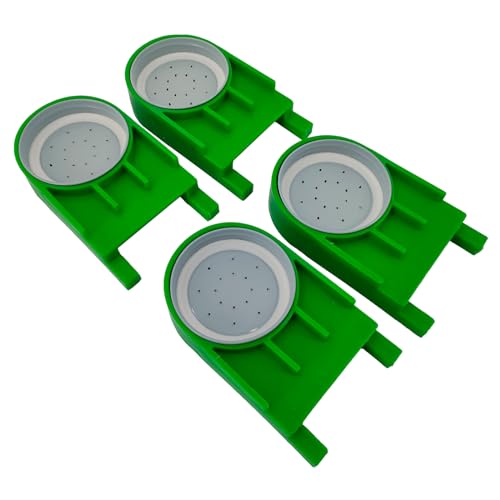
AukBeeFun Bee Entrance Feeders, 4 Pack
Four entrance feeders for about $14: spring stimulation across the whole yard at pocket-change prices.
Field check: Entrance-mount jar feeders · 4 per pack (listed) · roughly $3.50 per hive
Sometimes the right tool is the cheap one bought in multiples. Spring stimulation is frequent, thin, and forgiving: a little 1:1 syrup, often, to colonies that are strong and getting stronger. The AukBeeFun 4-pack covers that mission across four hives, or two hives with two spares, for roughly the cost of a bag and a half of sugar. The pattern is the familiar jar-on-a-base Boardman: the base slides into the entrance, a standard jar with a perforated lid inverts into it, and bees drink from inside the hive while you read the level from outside. Jar swaps take seconds, and replacement jars are whatever your kitchen already recycles.
What surprises people is how well the four-pack fits the multi-hive spring: feed all colonies simultaneously so no hive smells an unfed neighbor's syrup, and rotate cleaned spares in as jars come off. The plastic is lighter than the Foxhound's and the fit less refined, seat each base snugly and check after windy nights, but at $3.50 a hive the value is unarguable. Beekeepers building their first full kit can slot these next to the woodenware in our starter kit guide and still have change for the smoker. When fall comes, graduate the heavy feeding to the KAGZ top feeder and keep these in the shed for next spring.
- Style
- Entrance (Boardman-pattern) jar feeder
- Quantity
- 4 feeders per pack
- Jar compatibility
- Standard threaded jars (listed)
- Cost per hive
- Roughly $3.50 at publication
- Approx. price
- ~$14
What we like
- Cheapest per-hive feeding in the guide
- Feeds a whole small yard simultaneously
- Uses ordinary jars you already own
- Perfect fit for the light spring-stimulation mission
Worth noting
- Small capacity: refill-heavy under real demand
- Lighter build and fit than the Foxhound
- Same dearth-season robbing rules as any entrance feeder
Who should buy it: Buy the AukBeeFun 4-pack if you run several hives on a budget, want everyone fed simultaneously in spring, or want cheap spares so cleaning never interrupts feeding. It is the right first feeder purchase for cost-conscious beginners who will add a top feeder by fall.
What we don't like: Jar-class capacity means frequent refills the moment colonies get serious about syrup. The lighter plastic and looser fit demand a snugness check on installation, and longevity will trail the Foxhound. All entrance-feeder dearth caveats apply in full.
Bottom line: At about $14 for four, the AukBeeFun entrance feeders cost less per hive than the sugar going into them, and for the light-duty spring job that is exactly the right spend. Mount at the entrance, thread on a jar, and every colony in a small yard gets its 1:1 stimulation with level checks at a glance. Manage the format's dearth-season risk like the Foxhound above and the only real trade-off is jar-sized capacity.
More gear worth comparing
Beyond this guide: the highest-rated gear across every category and budget, with a live price check on each.



As an Amazon Associate we may earn from qualifying purchases, at no cost to you.
Quick shop: every pick
Skip the scroll: the whole lineup, with a live price check on each.
- KAGZ Hive Top Bee Feeder, 1.5 GallonsBest OverallKAGZ · ~$38Check price →
- benefitbee 10 Frame Hive Top FeederBest Multi-Duty Top Feederbenefitbee · ~$39Check price →
- NUOMIC 10 Frame Beehive Top Feeder, 2 PackBest Value for Two HivesNUOMIC · ~$59Check price →
- Foxhound Bee Co Entrance Feeder, Half Gallon 2-PackBest Entrance FeederFoxhound Bee Co · ~$34Check price →
- AukBeeFun Bee Entrance Feeders, 4 PackBest BudgetAukBeeFun · ~$14Check price →
How we chose
We judge feeders on the colony's terms first: does syrup get into bees without drowning them, chilling the cluster, or springing leaks that run down the comb. Drowning protection, bee access paths, and seal quality outrank capacity on our sheet.
Robbing exposure is a ranking factor. Any feeder that puts syrup scent at the entrance carries dearth-season risk, so entrance designs are judged on how they contain odor and spillage, and our guidance says plainly when not to use them.
Refill workflow matters because feeding is repetitive: a fall colony may take gallons across weeks. Feeders you can refill without smoke, veils off, at dusk, in thirty seconds score above anything that requires cracking the brood chamber.
Capacity claims are treated as listed, not verified: we do not measure to the ounce, and neither should your trust in a label. Fit claims (10-frame compatibility) are checked against standard Langstroth dimensions.
Prices come from our verified offer table; no brand bought a placement, and cheap feeders that cost a colony to robbing would be no bargain at any price.
Key terms
- Top feeder (hive-top feeder)
- A reservoir that sits on the uppermost box under the outer cover, letting bees climb up through protected access to drink. Refills happen without opening the brood nest, and syrup scent stays inside the stack, making it the safest high-volume format in dearth.
- Entrance (Boardman) feeder
- A jar-and-base feeder mounted in the hive entrance with the reservoir visible outside. Unbeatable for quick swaps and at-a-glance monitoring in spring, but its front-door syrup scent raises robbing risk during nectar dearth.
- 1:1 syrup
- Roughly equal sugar and water by weight, the standard spring feed per extension guidance. Its thin, nectar-like consistency stimulates brood rearing and comb drawing, which is why it is the feed for packages, nucs, and spring buildup.
- 2:1 syrup
- Roughly two parts sugar to one part water by weight, the standard fall feed. Its thickness is close to ripened stores, so bees can dehydrate and cap it quickly ahead of cold weather.
- Nectar dearth
- A period when little or no forage is available, typically mid-to-late summer in many US regions. Dearth flips the yard into a robbing economy, and it is the season when entrance feeders come off and entrances get reduced.
- Robbing
- Bees from other colonies invading a hive to steal stores, escalating from probing to a lethal frenzy. Feeders that leak or advertise at the entrance are common triggers; simultaneous feeding, top feeders, and reduced entrances are the defense.
- Drawn comb
- Foundation the bees have built out into usable cells. New packages must draw comb before they can store anything, which is why establishment feeding runs continuously until the boxes are built out.
Questions, answered
What is the best feeder for a beehive?
For most beekeepers, a hive-top feeder: our pick is the KAGZ top feeder (about $38), with a listed 1.5-gallon capacity, screened drowning protection, and refills that never open the brood nest. Entrance feeders like the Foxhound 2-pack (about $34) are the convenient spring complement. Many backyards end up happiest owning one of each.
What is the sugar syrup ratio for feeding bees?
Standard extension guidance: roughly 1:1 sugar to water by weight in spring, which mimics a nectar flow and stimulates brood rearing and comb building, and roughly 2:1 in fall, which bees can quickly ripen and cap as winter stores. Use plain white granulated sugar only, and never feed honey of unknown origin, which can carry disease spores.
When should I feed my bees?
Feed toward a specific gap: a new package or nuc drawing comb, a colony light on stores after harvest, or a dearth that has stalled buildup. Feed continuously during establishment, feed 2:1 in early fall until the hive is heavy, and stop when the colony stops taking syrup, the gap closes, or cold weather ends liquid feeding.
When should I stop feeding bees?
Stop when the job is done or the weather closes: comb drawn for a new colony, target weight reached in fall, or nights cold enough that bees no longer take liquid syrup. And never feed with honey supers on, because stored syrup contaminates the crop you plan to harvest as honey.
Do entrance feeders really cause robbing?
They raise the risk in dearth, and the mechanism is simple: syrup scent broadcast at the exact spot the colony must defend. In spring, with forage abundant and colonies strong, they are usually fine and wonderfully convenient. The working rule: entrance feeders in spring, top feeders from late summer on, and reduce entrances whenever robbing pressure appears.
How much syrup does a colony need in the fall?
It varies with climate and hive weight, but light colonies commonly take multiple gallons of 2:1 before winter, which is exactly why gallon-scale top feeders exist. Judge by heft rather than a recipe: lift the back of the hive weekly and keep feeding until it feels convincingly heavy, then confirm against regional guidance for winter stores.
Will bees drown in a hive top feeder?
In a bad one, yes, which is why drowning protection is our first ranking criterion. Good top feeders like the KAGZ screen the bees away from open syrup or route them through protected channels, so they drink at the surface without swimming. A few casualties are normal with any liquid feeder; hundreds mean the feeder is broken or badly designed.
Can I just put a jar of syrup out in the yard instead?
No. Open feeding sets off a free-for-all that feeds every colony and wasp within range, favors the strongest hives over the ones that need it, and can ignite yard-wide robbing that turns on your weakest colony. Feed inside or on each hive, all colonies at once, and keep the yard itself scent-free.
Do new packages of bees need to be fed?
Almost always, and generously. A package on undrawn foundation has no comb, no stores, and no income until it builds cells, so continuous 1:1 feeding is standard until the boxes are drawn, often for weeks. A top feeder's capacity shines here. Skipping establishment feeding is one of the classic first-year mistakes covered in our beehive kit buying mistakes guide.
Filed under Buyer's Guide
Part of Hive Health
Keep reading
The Best Varroa Mite Treatments (2026)
Fall feeding and fall mite treatment share the calendar that decides winter survival: the full treatment toolbox.
The Best Oxalic Acid Vaporizers (2026)
After the syrup is capped comes the broodless window: the vapor hardware for the winter mite knockout.
The Best Beehive Stands and Winter Wraps (2026)
A fed colony still needs a dry one: stands, wraps, and moisture control for the cold months.
First-Year Beekeeping Calendar
When to feed 1:1, when to switch to 2:1, and when to stop, mapped across a real first season.
The Best Beehive Starter Kits (2026)
The woodenware your feeder sits on: the starter kits we would actually put a colony in.
How Much Honey Per Hive?
What a colony produces and what it must keep: the stores math behind every feeding decision.