Our Pick: Wiley
Check price →The Best Beekeeping Books (2026)
Bees kill more colonies through beekeeper ignorance than through anything sold in a store, which makes a good book the highest-return equipment in the hobby. We ranked the five titles worth shelf space, matched each to the beekeeper it teaches best, and paired the whole list with the free university extension resources that keep book knowledge current.
By The BeehiveKits Hive Desk · 13 min read · 2026-08-28
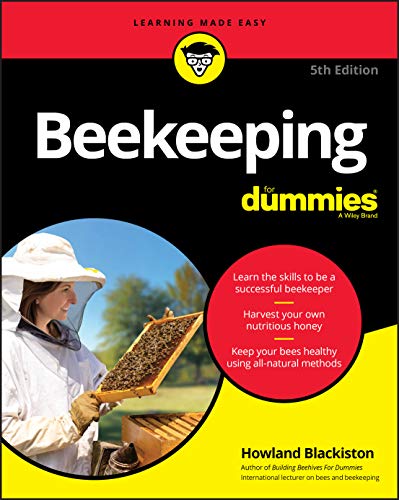
Beekeeping For Dummies
Wiley
The complete new-beekeeper reference, organized so the answer is findable the day you need it.
Check price★ Our Top Pick
Best Overall
Beekeeping For Dummies
The complete new-beekeeper reference, organized so the answer is findable the day you need it.
Not sure yet? Compare all 5 picks below ↓
Our pick is Beekeeping For Dummies ($15.99), and we say that with a completely straight face: behind the cheerful branding sits the most complete, most current, most usefully organized beginner-to-intermediate beekeeping reference in print. It is the book we see dog-eared on more real hive stands than any other, and the one we hand people who ask the most common question in this hobby: what should I read before my bees arrive?
Books matter disproportionately in beekeeping because the feedback loops are so slow. A woodworking mistake announces itself in minutes; a beekeeping mistake often surfaces months later as a dead colony in February, long after the cause is cold. Reading is how you borrow other people's dead colonies instead of raising your own. The five books here cover different learning styles and different beekeeping philosophies, and the guide tells you plainly which reader each one serves.
One thing this guide insists on: books are half the syllabus. The other half is free, written by scientists, and updated as the research moves: university extension programs like Penn State's pollinator group and the University of Minnesota's bee resources publish beekeeping instruction that no static book can keep pace with, especially on varroa management, where recommendations genuinely change. Every book below gets paired with the free resources that complete it.
Disclosure, plainly: no publisher paid for placement and none saw this guide early. Some links go to Amazon; if you buy through one we may earn a small commission at no extra cost to you, and it never reorders a ranking. Prices are from our verified offer table at publication.
The short version
- Our pick is Beekeeping For Dummies ($15.99): the most complete single reference for a new US beekeeper, organized so answers are findable mid-panic.
- The Backyard Beekeeper, 5th Edition ($15.59) is the pick for visual learners: photo-driven, warm, and strong on seasonal management.
- The First-Year Beekeeping Book ($24.99) is the pick for sequence-lovers: a literal week-by-week first season, training wheels included.
- The Beekeeper's Bible ($19.60) is the shelf-and-gift pick: history, culture, recipes, and craft projects wrapped around solid fundamentals.
- Top-Bar Beekeeping ($16.03) is the specialist pick: the standard manual for horizontal hives, essential there and only there.
- Pair any book with free extension resources: university programs update varroa and disease guidance faster than any print edition can.
| Book | Best for | Teaching style | Experience level | Price |
|---|---|---|---|---|
| Beekeeping For Dummies | Our Pick: the complete reference | Structured reference | Beginner to intermediate | $15.99 |
| The Backyard Beekeeper, 5th Ed. | Visual learners | Photo-driven narrative | Beginner to intermediate | $15.59 |
| The First-Year Beekeeping Book | Step-by-step first season | Sequential walkthrough | Absolute beginner | $24.99 |
| The Beekeeper's Bible | Gift and reference shelf | Encyclopedic, illustrated | All levels | $19.60 |
| Top-Bar Beekeeping | Horizontal-hive beekeepers | System manual | Beginner in that system | $16.03 |
The five books at a glance. Prices from our verified offer table at publication.
01 · Best Overall
Our PickBeekeeping For Dummies
The complete new-beekeeper reference, organized so the answer is findable the day you need it.
Field check: Wiley reference series · the most widely used US beginner beekeeping text
The best beekeeping book is the one that answers questions in the order panic asks them. Beekeeping For Dummies wins this guide on structure as much as substance. Every new beekeeper hits the same emergencies on roughly the same schedule: is my queen alive, what is this smell, why are there bees fighting at the entrance, is this swarming or robbing. This book's relentlessly signposted format, the thing the series is mocked for, is exactly what a shaking-handed second-month beekeeper needs at 7 pm on a Tuesday. You can find the robbing section with smoke still on your gloves.
Substance holds up its end. Coverage runs from choosing equipment (Langstroth-standard, sensibly, as our hive comparison recommends for the same reasons) through package and nuc installation (our nuc box and swarm trap guide covers the hardware side of that chapter), inspection technique, seasonal management, honey harvest, and a genuinely solid disease-and-pest section that treats varroa with the seriousness the mite deserves. Regular revisions keep it more current than most of the category, though on treatment specifics we would still cross-check the living university resources this guide pairs it with; label windows and best practices move faster than print.
The honest limits: it is a reference more than a bedtime read, prose is workmanlike, and experienced beekeepers will have outgrown two-thirds of it. None of that costs it the crown. For the beekeeper it exists to serve, the person whose bees arrive in eight weeks, no other single volume comes close per dollar.
- Format
- Paperback reference
- Publisher
- Wiley (listed)
- Level
- Beginner to intermediate
- System
- Langstroth-standard focus
- Price
- $15.99
What we like
- The most complete single beginner reference in print
- Find-it-fast structure earns its keep mid-emergency
- Serious, current-minded varroa and disease coverage
- Frequently revised; ages better than most rivals
- Unbeatable knowledge per dollar at $15.99
Worth noting
- Reference-book prose, light on charm
- Experienced beekeepers have outgrown much of it
Who should buy it: Buy it if you are in your first three years of beekeeping or about to start: it is the reference the rest of your shelf leans on. It is also the right single book to gift alongside a starter kit.
What we don't like: Workmanlike prose and a format some readers find clinical; it teaches thoroughly but rarely delights. Treatment specifics should still be checked against current extension guidance, as with every printed book.
Bottom line: Ignore the branding reflex; this is the best single book a new US beekeeper can own. It covers equipment, installation, inspections, seasonal management, diseases, mites, and harvest in the series' famous find-it-fast structure, and it is revised often enough to stay usefully current. If you buy one book, this is the one.
02 · Best for Visual Learners

The Backyard Beekeeper, 5th Edition
The photo-driven teacher: warm, experienced, and strongest exactly where beginners see least, inside the frames.
Field check: Quarry Books, 5th Edition · the standard photo-led backyard beekeeping text
Beekeeping is a visual craft, and this is the visual textbook. The hardest part of learning bees is that every judgment call is a picture: is that pattern spotty, is that cup charged, is that comb honey-bound. The Backyard Beekeeper, 5th Edition answers with the best photography in the category, page after page of frames that look like what you will actually lift out of your own boxes. For learners who absorb a picture faster than a paragraph, this replaces a hundred forum threads of "is this normal?"
The voice is the other asset: patient, practical, unmistakably from someone who has kept backyard bees for decades and made the mistakes personally. Seasonal management is a particular strength, and the honey and wax chapters go further into harvest craft than Dummies bothers to. The book leans gently natural in philosophy, comfortable with less-interventionist choices, which we flag not as a flaw but as a stance; on varroa specifically we would follow its monitoring advice and calibrate treatments against the current thresholds in the extension resources below. Pair it with our first-year calendar and the season stays on rails.
- Format
- Paperback, photo-led
- Edition
- 5th (listed)
- Publisher
- Quarry Books
- Level
- Beginner to intermediate
- Price
- $15.59
What we like
- Best photographic teaching in the category
- Warm, experienced backyard-scale voice
- Strong seasonal management and harvest craft
- Perfect complement to a reference-style manual
Worth noting
- Slower to navigate mid-emergency
- Natural-leaning mite philosophy needs a current counterweight
- Incremental update over the prior edition
Who should buy it: Buy it if you learn from photographs, want a warmer teaching voice than a reference manual, or as the ideal second book beside Dummies: one to look things up in, one to actually read.
What we don't like: Less findable in a hurry than the Dummies structure, and its natural-leaning stance on intervention deserves the extension-resource counterweight on mite management. Owners of the 4th edition get modest updates.
Bottom line: If Dummies is the manual, this is the mentor. The Backyard Beekeeper teaches through photographs of the things that words describe badly, what queen cells versus swarm cells look like, what a good brood pattern is, how much bearding is normal, wrapped in decades of practical backyard experience and a gently natural-leaning philosophy. Many beekeepers rightly own both.
03 · Best Step-by-Step First Season

The First-Year Beekeeping Book for Beginners
The literal walkthrough: your first season as a sequence of steps instead of a body of knowledge.
Field check: Independent press · sequential first-season format, start to first winter
There is a reader for whom every other beekeeping book is overwhelming, and this book was written for them. The First-Year Beekeeping Book for Beginners organizes itself the way a first season actually unfolds: what to decide and buy in winter, what happens the day the bees arrive, what week two's inspection is for, what June should look like, what must be done by September. That sequencing does something subtle and valuable: it converts a paralyzing body of knowledge into a series of next steps, each one small enough to actually take.
The tradeoff is scope. At $24.99 it is the priciest book in this guide while covering the least total ground; year two barely exists in it, and its reference value after your first winter is modest. We also gave the independent-press format extra scrutiny in our methodology pass, and it earns its place on usefulness, but treatment specifics should lean on the extension resources below, same as every title here. Think of it as training wheels: not the bike, invaluable exactly once, and worth every dollar to the rider who needs them. Sequence-lovers should also bookmark our own how to start beekeeping walkthrough, which runs the same play for free in condensed form.
- Format
- Paperback walkthrough
- Scope
- First season, start to winter
- Level
- Absolute beginner
- Shelf life
- Roughly one year, by design
- Price
- $24.99
What we like
- Converts overwhelm into an ordered sequence
- Mirrors the real first-season timeline
- Reassuring for anxious starters
- Pairs well with a fuller reference
Worth noting
- Priciest book, narrowest scope
- Little value after year one
- Needs a reference book beside it
Who should buy it: Buy it if the other books feel like drinking from a hose: absolute beginners who want a told-what-to-do-next first season, and gift buyers helping someone anxious across the starting line.
What we don't like: The most money for the least total content in the guide, and its usefulness fades sharply after the first winter. It supplements a real reference; it does not replace one.
Bottom line: Some learners do not want a reference or a mentor; they want to be told what to do next. This book is that: the first season laid out as an ordered sequence from pre-purchase decisions through first winter prep. It is the narrowest book here and the most reassuring, and for a certain anxious, checklist-loving beginner it is exactly the right first purchase.
04 · Best Gift & Reference Shelf
Best Gift
The Beekeeper's Bible: Bees, Honey, Recipes & Other Home Uses
The beautiful one: history, culture, craft, recipes, and sound fundamentals in a book people are thrilled to receive.
Field check: Abrams Books · illustrated hardcover-format compendium of beekeeping, honey, and hive craft
Every shelf needs one book that argues bees are a civilization worth joining. The Beekeeper's Bible is that book: part natural history, part practical manual, part cultural archive, illustrated like the heirloom it is clearly built to become. The management chapters are genuinely sound, biology, equipment, seasonal care, presented with more elegance and less urgency than the working manuals above. And then it keeps going where they stop: honey recipes, mead, candles, balms, polishes, the entire domestic afterlife of the hive that is half the romance of keeping bees at all.
We rank it fourth as a training manual and first as an object. Its inspection guidance will not beat Dummies to the point mid-crisis, and its heft keeps it out of the bee yard entirely. But as the book that recruits a beekeeper, anchors a shelf, or crowns a gift basket, it is the obvious pick, which is exactly the role it plays in our gifts for beekeepers guide too. Buy it for someone bee-curious and include your phone number for the questions that follow.
- Format
- Illustrated compendium
- Publisher
- Abrams Books (listed)
- Scope
- Biology, history, management, recipes, crafts
- Level
- All levels
- Price
- $19.60
What we like
- The category's best gift, by a wide margin
- Honey, mead, wax, and craft chapters no manual matches
- Sound fundamentals inside the beauty
- Built and bound to be kept for decades
Worth noting
- Not a field or emergency reference
- Management coverage trails the working manuals
Who should buy it: Buy it as a gift for the bee-curious or the newly stung-with-enthusiasm, as the culture-and-craft companion to a working manual, or for the honey and wax chapters alone if harvest projects tempt you.
What we don't like: Too lovely and too large for field use, and its how-to sections, while sound, are not the fastest or most current path through an emergency. It complements the working manuals rather than competing with them.
Bottom line: The Beekeeper's Bible is the book this hobby gives as a gift, and deservedly: a gorgeous, encyclopedic tour through bee biology, beekeeping history, hive management, and then onward into honey cookery, wax crafts, and home uses no other book here touches. As a sole how-to manual it is second-tier; as the book that makes someone fall for bees, it has no rival.
05 · Best for Top-Bar Beekeepers

Top-Bar Beekeeping: Organic Practices for Honeybee Health
The horizontal-hive manual: essential for the top-bar path, irrelevant off it, and honest about which is which.
Field check: Chelsea Green Publishing · the standard manual for horizontal top-bar hives
Alternative hives fail from Langstroth advice applied sideways, and this book is the fix. Top-Bar Beekeeping: Organic Practices for Honeybee Health is the standard manual for horizontal hives, and its value is precisely the material no general text covers: managing free-hanging comb that will shear off a bar if turned flat, spacing bars to prevent cross-combing, reading a horizontal broodnest, and harvesting by crush-and-strain without an extractor in the workflow at all. Our hive-philosophy comparison makes the case for who belongs in this system; this book is the operating manual once you decide you do.
Its organic, treatment-minimal philosophy is stated in the title and threaded throughout, and we say here what we said there: absorb the comb craft wholeheartedly and run the mite chapters past current extension guidance, because varroa does not grade on philosophy. At $16.03 it remains the cheapest possible test of whether the horizontal path fits you, best taken before any hive is bought or built.
- Format
- Paperback manual
- Publisher
- Chelsea Green (listed)
- System
- Horizontal top-bar hives
- Philosophy
- Organic, low-treatment
- Price
- $16.03
What we like
- The definitive horizontal-hive manual
- Comb craft found in no general text
- Extractor-free harvest, properly taught
- Cheap insurance before a system commitment
Worth noting
- Useless to Langstroth-only beekeepers
- Mite philosophy needs a modern counterweight
Who should buy it: Buy it if a top-bar hive is in your plans or even your daydreams; it is the system's standard text and the cheapest way to test the commitment. Langstroth beekeepers can pass entirely.
What we don't like: Zero relevance outside horizontal hives, and its treatment-minimal varroa stance needs pairing with current university guidance. The one true specialist on the list, ranked accordingly.
Bottom line: This is the specialist entry, and the specialty is the point: top-bar hives run on different mechanics than the Langstroth world the other four books assume, and this is the text that teaches them properly, comb management, bar-by-bar inspection, extractor-free harvest. If you are going horizontal, it is required reading. If you are not, skip it without guilt.
More gear worth comparing
Beyond this guide: the highest-rated gear across every category and budget, with a live price check on each.




As an Amazon Associate we may earn from qualifying purchases, at no cost to you.
Quick shop: every pick
Skip the scroll: the whole lineup, with a live price check on each.
- Beekeeping For DummiesBest OverallWiley · $15.99Check price →
- The Backyard Beekeeper, 5th EditionBest for Visual LearnersQuarry Books · $15.59Check price →
- The First-Year Beekeeping Book for BeginnersBest Step-by-Step First SeasonIndependent · $24.99Check price →
- The Beekeeper's Bible: Bees, Honey, Recipes & Other Home UsesBest Gift & Reference ShelfAbrams Books · $19.60Check price →
- Top-Bar Beekeeping: Organic Practices for Honeybee HealthBest for Top-Bar BeekeepersChelsea Green · $16.03Check price →
How we chose
We judge beekeeping books the way we judge hives: by colony outcomes. A book earns rank by making a first-year beekeeper's bees more likely to be alive in April, not by charm.
We weight findability heavily: mid-season questions arrive in a hurry, and a reference you cannot navigate in the bee yard with gloves on is a coffee-table book.
Currency matters most on varroa and treatment guidance, so we note where any book's advice should defer to living extension resources.
Philosophy is labeled, not hidden: treatment-free and natural-leaning texts are flagged so readers know the stance they are absorbing.
Every price comes from our verified offer table, and no publisher bought a position.
Key terms
- Extension program
- The public-education arm of US land-grant universities, publishing free research-based beekeeping guidance. The living counterpart to any printed book, and the authority to check on treatments and thresholds.
- Brood pattern
- The arrangement of capped brood on a comb, tight and solid versus spotty, one of the fastest visual reads on queen and colony health. The kind of judgment photo-driven books teach best.
- Treatment-free beekeeping
- A philosophy of managing colonies without varroa miticides. Books vary widely in stance; we flag each title's position because absorbed philosophy quietly becomes practice.
- Varroa threshold
- The mite-count level, commonly around 2 to 3 mites per 100 bees by extension guidance, at which treatment is warranted. A moving target that print books date out of; verify seasonally.
- Crush-and-strain
- Extractor-free honey harvest by crushing comb and straining: standard in top-bar beekeeping and covered properly only in the specialist manual here.
- Nucleus colony (nuc)
- A small started colony on five frames, the gentler alternative to package bees. Good beginner books walk both installation paths; know which your supplier sells before your reading week.
Questions, answered
What is the best beekeeping book for beginners?
Our pick is Beekeeping For Dummies ($15.99): the most complete single reference for a new US beekeeper, with a structure built for finding answers quickly and coverage that runs from equipment through diseases and harvest. The Backyard Beekeeper ($15.59) is the closest rival and the better read; many beekeepers sensibly own both, and together they cost less than a bee package.
Should I read a beekeeping book before buying bees?
Emphatically yes, and ideally a full season's worth of chapters before the bees ship. Beekeeping punishes ignorance on a delay: the mistake made in June shows up as a dead-out in February. Reading first turns your first-year mistakes into other people's, which is the entire economic argument for a $16 book against a hundred-plus-dollar colony.
Are beekeeping books outdated on varroa treatment?
Partially, always, and it matters. Print revision cycles cannot track shifting treatment labels, temperature windows, and threshold guidance, which is why we pair every book with free university extension resources like Penn State Extension and the Bee Health eXtension hub. Use books for structure and craft; verify anything about treatments against current extension guidance each season.
What free resources are as good as a beekeeping book?
University extension programs come remarkably close and beat books on currency: Penn State Extension's pollinator resources, University of Minnesota Extension's bee guidance, the cooperative Bee Health eXtension hub, and UC Agriculture and Natural Resources are all free, research-based, and updated. Local bee clubs add the mentorship layer no medium replaces. The strongest beginner education stacks a book, extension resources, and a club together.
What is the best beekeeping book to give as a gift?
The Beekeeper's Bible ($19.60): illustrated, encyclopedic, and beautiful enough that non-beekeepers enjoy it while actual beekeepers still use it, with honey recipes and wax craft chapters no working manual includes. For a giftee whose bees are already ordered, Beekeeping For Dummies is the more useful package; our full gifts-for-beekeepers guide pairs books with gear by budget.
Do I need a special book for a top-bar hive?
Yes. General beekeeping books assume Langstroth equipment, and their mechanics translate badly to free-hanging comb: turning a top-bar comb flat the way you would a framed one can shear it off entirely. Top-Bar Beekeeping ($16.03) is the system's standard manual covering comb management, inspection, and extractor-free harvest, and it is essential before your first horizontal season.
Is Beekeeping For Dummies actually good or just popular?
Actually good, and popular because of it. Under the series branding is a thorough, regularly revised reference with serious varroa and disease coverage, organized so a panicking beginner can find the robbing section with gloves on. Its weaknesses are charm and depth-for-experts, neither of which is what a first-year beekeeper is missing at 7 pm with a question.
How many beekeeping books do I actually need?
Two covers most beekeepers: a findable reference (Dummies) plus a visual teacher (The Backyard Beekeeper), under $32 together. Add the specialist manual only if you run its system, the sequential first-year book only if checklists calm you, and the Beekeeper's Bible when the hobby turns into a love affair, which, fair warning, it tends to.
Filed under Buyer's Guide
Part of Beekeeping 101
Keep reading
How to Start Beekeeping
The condensed version of what these books teach: your whole first year, in order, free.
Langstroth vs Top Bar vs Warre
Decide your hive system before your reading list; the specialist manual only matters on one path.
The Best Beehive Starter Kits
The hardware these books prepare you for, ranked benchmark to budget.
The Best Gifts for Beekeepers
The Beekeeper's Bible plus gear picks by budget tier, for everyone shopping for a bee person.
The Best Varroa Mite Treatments
Where book knowledge most needs a current supplement: thresholds, windows, and picks.
First-Year Beekeeping Calendar
The season-by-season companion to any book on this list.